
Prevention
- Details
- Category: Prevention
Identify wasps
"If in doubt - treat it as a wasp."
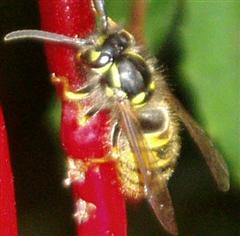
Flight and buzz
Antennae, waist, eyes, wings, leg colour
Behaviour
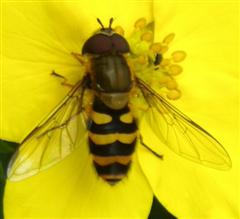
Only wasps show a marked interest in us. Bees and hoverflies are interested in foraging at flowers. Wasps visit flowers in a similar way to bees and hoverflies. Honey bees show a limited interest in sweet food and drinks but wasps show a marked interest in our food and drinks. Hoverflies and bumblebees are solitary in their activity whereas honey bees and wasps may attend a sweet food source in a gang. Only the hoverfly does not nest whereas honey bees, bumblebees and wasps all have the habit of coming and going from one site in the garden where their nest is. The wasp is the only one of these insects showing an interest in food waste for example in dustbins
Identification videos
Bumble bee
Hoverfly
Honey bee
Wasp
- Details
- Category: Prevention
Wasp biology for sting prevention
Any wasp stings occur in late summer and early autumn, when breeding ceases. The reduction in the supply of sweet waste excretion from larvae causes wasps to seek out sweet food elsewhere e.g. a BBQ or dustbin.
Wasps help balance nature and through natural pest control remove thousands of aphids, caterpillars, fly larvae and other garden pests. They pollinate and recycle nutrients through scavenging. Wasps are eaten by spiders and badgers. The problem with wasps is people in their territory! You may find a little damage to wooden parts of your property and parts of the garden where you cannot go because of a nest. Apart from stings and potential allergy other problems are use of insecticides and paying for professional pest control.
Expect to find wasps in natural environments (gardens, parks, woods) where they live. If you enjoy the fun of a walk outside you will come across wasps because you are in their territory.
Wasps visit flowers so be cautious what you plant on paths, under windows, near doors and especially in play areas. Choosing what you plant helps to avoid inviting wasps to come into your territory.
Expect wasps to take a great interest in rubbish. Keep your dustbin clean and keep the lid firmly closed. During "wasp busy" months of the year (April - October) move it away from your door. Tie rubbish bags to keep in smells. Tightly cover leftover food especially at picnics. Close doors and windows during food preparation and eating or if you need to have them open keep them just ajar.
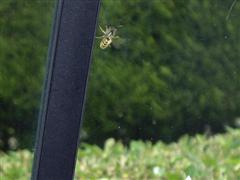
Queen wasps often over winter (hibernate) in our territory. They require somewhere cool, dry but frost free. Be vigilant as they start to wake around February and March. It is not surprising then that spring cleaning and Do It Yourself can disturb a queen wasp at any time from October through to April. Be especially careful in the loft, unheated or very cool bedrooms, pots in garden sheds, greenhouses and any other similar places. Pulling the curtains in a bedroom not used very often, heating a bedroom for a Christmas guest, rifling the shed after early requests for a BBQ - think "Wasp?" all the time.
Be aware that the wasp population is naturally high in some years and low in others. Don't be concerned with journalists calling wasps "furry friends" in years when there are few about and "angry foe" when there are large populations. Simply take measures to avoid wasp stings every wasp season.Wasps fly to the light and a wasp in the house/car will fly out of an open window. Avoid squashing wasps as the scent produced will attract nearby wasps bent on stinging. Learn to distinguish between a busy and peaceful wasp which you can watch from a distance and a frustrated or annoyed wasp which you should distance yourself from. Wasp nests are warmer than the air temperature by up to 10 degrees C. So expect them to be more active and more easily roused to sting in hot weather.
- Details
- Category: Prevention

You must always put your own health above that of a wasp. If a wasp lands on you wait for it to fly off or brush gently off with something like a small piece of paper (do not brush it with your hand).
If you are faced with a wasp don’t challenge it - it is far better for you to leave the area (e.g. car, kitchen, picnic area) until the wasp has gone. Do not run or thrash or swat. If there is only one wasp, then keep still and, when safe, move to shade or away from what is attracting the wasp. If stinging seems inevitable, then cover your face with hands or clothing or get face-down on the ground. If there are multiple wasps then your removal to safety is urgent.
If you use a spray to kill a wasp leave the room immediately after spraying because a dying wasp is prone to stinging. An apparently dead wasp may be only stunned. Stinging is one of its last powers. If you spray insecticide remember to remove food, cover fruit and protect pets and people from inhalation.
If you find what appears to be an old and seemingly inactive wasp nest do not disturb it until you have been able to observe it in warm weather. There may still be living wasps inside.
Removing a wasp from the house
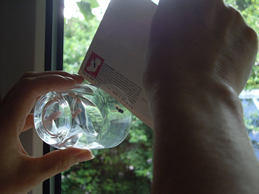

Wasps fly to the light when sources of sweet food are covered. You need one source of light, preferably a window. Turn off electric lights. If you have two windows in the room close the curtains of one. You can trap a wasp by placing the open end of a small to medium sized glass tumbler over the insect and placing this firmly against the window. You can then slip something firm but thin like a postcard between the window and the glass. Keeping the glass firmly closed with the card you can then release the insect outside. Once released you should quickly leave the area, go back inside the house and close the door.
Is it a bee or a wasp - you can tell from the sting!
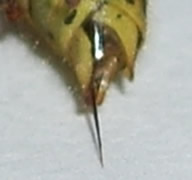
It is useful to know if it was a bee or a wasp because alllergy to bee stings is much less common than allergy to wasps. If there is a poison sac it was definitely a bee. If there is no poison sac on your skin- then it was probably a wasp - unless you have brushed the poison sac away without noticing.
With a bee sting the poison sac(k) will usually be left behind and the muscles around the sac continue to pump the poison (venom) into you. In such a case you need to scrape the sting and poison sac off as quickly as possible using anything readily to hand that would act in a similar way to a fingernail, credit card, piece of cardboard or blade of a blunt knife. Speed of removal is considered to be a higher priority than technique.
Allergy to bees is uncommon but you can treat a bee sting in much the same way as a wasp sting, omitting the brief topical vinegar stage.

- Details
- Category: Prevention

There are two main ways of looking at house defence: how to stop wasps getting into your house, and how to keep them away from the house. You need to be aware of wasps in your loft but that is not covered in this website. I don't think there is an easy way to prevent it. I am interested here in the event that can affect us many times a day right across the whole of the summer on warm dry days. That is wasps coming through open doors and windows.
Unlike Hitchcock's film "The Birds" there are not many wasps outside your house seeking entry via every pore. The wasps are at doors and windows because of smells. The solution is to keep access closed, especially while you are cooking. It is also important that you keep smells away from your doors. Moving the dustbin away from the back door is helpful. Ensure the lid is always closed. Pet food remains can attract wasps.
There are other solutions. You can try to create a through draught by opening windows where there are no food smells attracting wasps. The en suite bathroom and one other bedroom might suffice. In the autumn this leads to queen wasps seeking shelter for the winter. Just such an over wintering lodger stung me on the foot in my bedroom one April. For this reason I urge caution during Spring Cleaning.
Alternatively create a distraction using wasp traps.
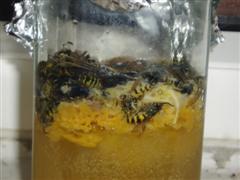
You can make your own (there are commercial wasp traps on the web) with a 200g coffee jar, or similar, with a lid and a central hole (foil or other) containing sweet smelling liquid contents up to about one third level. Use jam, beer, fruit, orange juice and a little water. I have four of these placed around the outside of the house. One is placed on the windowsill near each window that I open regularly during food preparation and another is placed near the back door. The untrained eye might assume that I'm attracting wasps. It is simply trapping them and funnelling them away from my kitchen. It is rare for anything other than wasps (and a few flies) to enter the trap. Reduce the smells emerging from your house by keeping most of your fruit in the fridge. One web site suggests wasps may sit on moist washing. I have no experience of a wasp doing this but am now more cautious grabbing the washing off the line in case of a sting to the hand!
- Details
- Category: Prevention
Remember the dangers are mainly in the three “F”s: flowers, food and fluids!
Young children should be supervised out of doors for all sorts of reasons. You can help them avoid danger as well as teach them how to live safely with nature. Children who understand the natural world can one day share skills with their own children. Quiz your children about wasp sting prevention in the same way as you check understanding of safety principles before you allow them independence in the kitchen or bathroom.
Wasp stings involving children mostly happen in the garden while playing or eating. Every few days from April to July check for signs of a wasp nest because of the danger of a ball or child disturbing it by accident. There is more information about this on the “Recognition of wasps”, “Gardening and DIY” pages. Ban outside play if you find a nest until it has been removed by experts.
Flowers
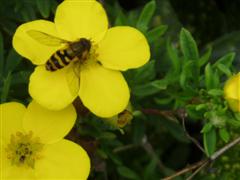
Having decided there are no wasp nests in your own garden, there are still likely to be wasps visiting from nearby wild areas or other gardens. Wasps like nectar so be cautious about play near flowers. Wear shoes for running over grass where there are low growing flowers like clover to reduce risk of a wasp sting.
Food
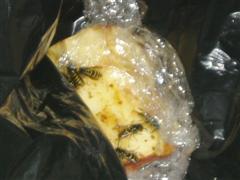
Food remains on clothes, hands and face attract wasps. Eating indoors is the safest way to avoid stings in the mouth. Eating lollies, ice creams and other sweet foods outside on hot days is high risk. Playing near ripe fruit bushes and trees, rotten fruit, compost and food waste is very dangerous. There are often wasps visiting rubbish bins in streets, parks and campsites so don’t let young children use them unsupervised.
Fluids
Never drink from a can outdoors. A bottle is safer if you put the lid back on between mouthfuls. Wasps might take an interest in the straw of a small juice carton but they cannot get inside – so this is the safest drink for outdoors. Wasps floating in a paddling pool or outdoor swimming pool may still be alive so use something like a kitchen sieve to remove all debris before children play in the water.