Treatment
- Details
- Category: Treatment
Do not rely only on the internet. Consult your family doctor or community nurse.
There are five main health problems arising from a wasp sting:
Initial pain which can feel quite severe, especially to a child. The pain is much worse than pain from nettle stings or injections for immunisations. Personal experience is that the pain is very bad for around 30 to 40 minutes if not treated and then usually begins to fade. Treatment can instantly reduce pain sensations to minimal.
Local swelling at, and nearby, the wasp sting site. Untreated this can be very marked swelling. The swelling can cause pain itself so for example a badly swollen hand will hurt for many hours, long after the pain of the sting has gone. Swelling in itself is not usually harmful unless an eyelid becomes so puffy that there might be pressure on the nerves at the back of the eye (this needs prompt medical attention), or the airway is affected. Stings to the lip, mouth, inside or outside of the throat all need to receive prompt medical attention if swelling begins to develop. Swelling on a hand might cause a ring to cut blood supply off – so rings should always be removed when the sting is on the hand.
Infection of the sting site need not occur if proper care is taken. Although wasps visit dirty places like dustbins, rubbish bins and compost bins the only part in contact with you is the sting which had been held inside the wasp. It seems unlikely the sting would carry much in the way of infection. If the wasp stings through dirt on your skin due to the whatever you were doing prior to the sting, for example gardening or cleaning your dustbin then infection is more likely. Any scratching of the irritated site may also lead to infection. Simple hygiene measures immediately and good aftercare to minimise scratching greatly reduce the risk of infection.
Severe systemic allergic reaction (anaphylaxis). This is a very serious situation which can be life threatening. Statistically this occurs rarely and the even more rare chance of it causing death are mathematically less than your chance of winning a large amount of money on the lottery (In England 8 people in the whole year in 2004 and 2 people in one month in August 2006). No-one knows when their next sting may be the one to cause this serious total body reaction to a wasp sting. Symptoms and collapse can occur suddenly within the hour of the sting and so extremely prompt emergency medical care is required within 20 – 40 minutes of allergic reactions starting.
Fear of wasps in case of future stings and serious reactions. This fear can cause people to get stung again due to their reactions when a wasp is near them and can even cause other injury due to road traffic collisions if a wasp enters a car during driving. As it is actually very easy to avoid stings this fear can be minimised by developing understanding of how wasps live and what they want when they are near us. It should be very easy to become less fearful by reading through this website
Be prepared
Wasp sting aftercare is something you need to know about before you or your child gets stung. In the time it takes you to read this information severe reactions may have occurred and so it is better to have a thorough prior understanding of what to do and how to recognise and prevent problems occurring. Just like scalds with very hot water, prompt first aid for wasp stings is vital and can reduce the subsequent health problems.
There are some government organised information websites about what to do about wasp stings and as a health care professional I must advise you to use those sites as your main source of information and guidance. Currently excellent examples of these sites are called NHSDirect and PatientUK. There are links to their websites below (put stings into the search facility on their home page). Advice on those sites is updated more regularly than this website and their advice will always take into account any new evidence. If your Health Centre has a website you should also check what your family doctor advises for wasp sting treatment.
- Details
- Category: Treatment
Do not rely only on the internet. Consult your family doctor or community nurse.
- Ascertain the identity of the stinging insect - with a wasp there is no sting to remove and wasps are more likely than bees to cause systemic allergic reactions
- Reassure - for most people wasp stings can be treated with home or over the counter (OTC) remedies
- Prompt first aid - to avoid local & reduce severity of systemic, allergic response
- Observe – for signs of severe allergy = Anaphyaxis
- If anaphylaxis is suspected, emergency medical treatment is required within 20 – 40 minutes
Anaphylaxis may include all or some of the following:
- Itchy bumps (hives) and/or redness spreading over the body rapidly;
- Shortness of breath or wheezing or tightness in chest;
- Swelling of the mouth, face, lips or throat;
- Pallor, fainting, reduced consciousness;
- Nausea or vomiting;
- Chest pain;
- Anxiety and a sense of impending doom;
- Dropping of the tone of the voice, huskiness, feeling full or tight in the throat.
First aid
- antihistamine (topical cream to the skin soon after the sting and then consider the need for oral anti-histamine but read doses and precautions as some medical conditions and concurrent use of some medicines preclude use with the comment “excepting in emergency”)
- cooling e.g. skin protected ice application (or running cold water, or cold compress)
- elevate - if sting site allows this for example a hand or foot.
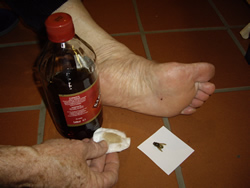
- pain relief - topical at first – cream or topical vinegar in the first 30 – 45 minutes (e.g. on cotton pad) and then consider if oral analgesia is needed.
Topical steroid creams may be advised by some health care experts but are not part of your first considerations (always be aware of the usual exclusions such as the face)
Safety considerations and actions
- Observe for signs of anaphylaxis (see above) & possible need for ambulance
- Remove to hospital or community doctor if there is oro-pharyngeal (mouth), oesophageal (throat or gullet) or peri-orbital (around the eyes) swelling
- Removal of rings
- Prevent infection (washing of area with soap and water)
- Avoid scratching (continue with topical and/or antihistamines until symptoms cease e.g. possibly around 48 hours)
- Seek health care advice for signs of local infection (increasing redness, swelling, warmth and tenderness when initial reaction to sting should have subsided)
- Refer to hospital for multiple stings (health risks may occur days later e.g. renal failure)
- Do not drive if there is a risk of faint or collapse or drowsiness after oral antihistamine
- Find a safe balance between reassurance that most stings give only mild symptoms and assessing the need for emergency care, even occasionally a 999 call
- Think about the ratio of body size to venom – a small child with two or three stings may need emergency care whereas a non-allergic adult may be able to cope with self care.
- Continuation of treatment - for up to 48 hours to reduce swelling and itch
- Guidance on when medical expertise is required
- Assess – after severe reaction a prompt visit to the family doctor is advised to discuss the need for Epipen prescription. If the person stung already has this equipment always replace it immediately after use. There may be a need to educate the patient and family on wasp sting prevention. Severely allergic people should never be alone where there is a high risk of wasp sting e.g. outdoors.
- Education on sting prevention may be useful in the immediate aftermath of a sting to avoid future stings and fear of stings developing.
- Details
- Category: Treatment
Do not rely only on the internet. Consult your family doctor or community nurse.
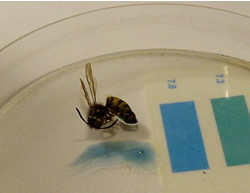
There does not appear to be (so far) any scientific basis* for the use of topical vinegar on a wasp sting. It is widely claimed as being of value in the treatment of wasp stings. The basis for the claim is folklore. My own experience of being stung by a wasp was that vinegar (e.g. malt vinegar) applied on a cotton pad for approximately 40 minutes completely relieved the pain of the sting. During that time removal of the vinegar soaked pad caused almost immediate return of the pain. A number of websites developed by Primary care Trusts in England suggest using topical vinegar but NHSDirect and PatientUK do not mention it. My concern is that while it seems helpful for pain relief initially after a sting it is on its own inadequate and insufficient treatment. So, while vinegar may help, and is unlikely to harm, the other comprehensive advice should also be followed.
*The suggested science behind use of vinegar is that the sting is alkaline and that vinegar as a mild, and readily available, acid may reduce pain by neutralizing the pH. On the basis of only one insect we have a possible result of alkaline sting but the picture shown may simply be alkaline abdominal contents.